Trekking in Ha Giang is quickly emerging as the most authentic way to explore Vietnam's final frontier, offering a slower, more intimate alternative to the famous motorbike loops. While thousands of travelers zip through the Dong Van Karst Plateau on two wheels, those who choose to travel on foot are rewarded with access to hidden valleys, "sky-high" H'mong villages, and secret trails that engines simply cannot reach. This limestone wonderland, with its jagged black rocks and deep canyons, transforms from a scenic backdrop into a tangible, challenging playground for the adventurous hiker.
I. Why Choose Trekking Over Motorbiking?
Ha Giang is synonymous with the "Ha Giang Loop," but trekking offers a completely different perspective.
1. Cultural Immersion
When you are on a motorbike, you are an observer passing through. When you are trekking, you become a participant. Walking allows you to stop at local markets, engage with ethnic minority communities (such as the H'mong, Tay, and Dao), and understand the rhythm of life in the mountains. You can hear the sounds of nature and the wind whistling through the karst peaks, unmasked by the roar of an engine.
2. Access to Hidden Gems
The most beautiful parts of Ha Giang are often off the main road. Trekking trails take you deep into the bamboo forests of the Du Gia National Park or up the steep, narrow paths of the "Sky Path" on Ma Pi Leng pass—places where motorbikes are either forbidden or too dangerous to operate.
II. The Best Trekking Routes in Ha Giang
The province is vast, offering terrain ranging from terraced rice fields to rocky canyons.
1. Hoang Su Phi: The Rice Terrace Kingdom
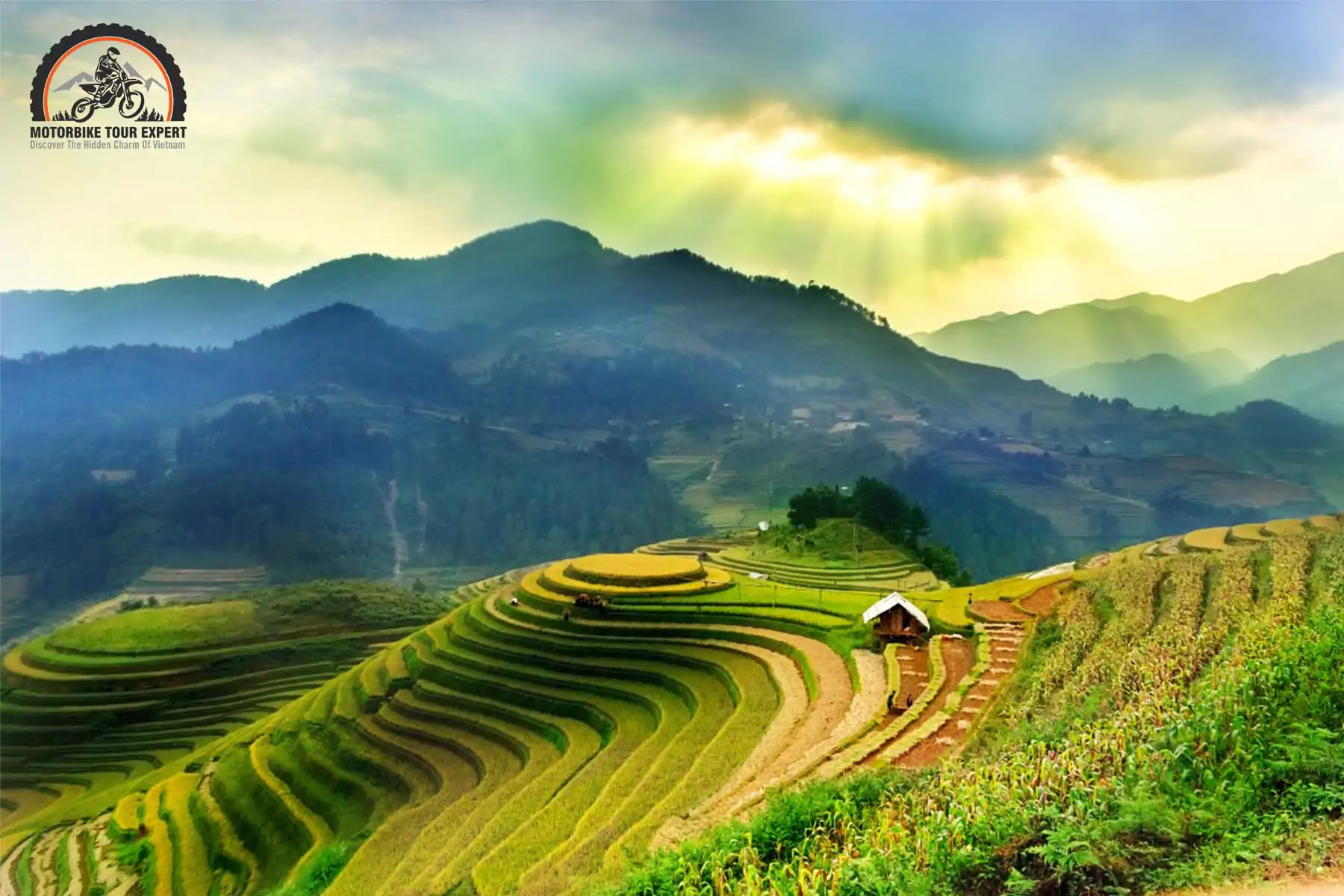
If you are looking for soft, green landscapes, Hoang Su Phi is the destination. Located in the western part of Ha Giang, this district is famous for its towering rice terraces, which are recognized as a National Heritage.
Best Time: September to October (Harvest Season).
Difficulty: Moderate. The trails wind through soil paths connecting Red Dao and Nung villages.
2. Dong Van and The "Sky Path"
For those seeking dramatic, rugged geology, the trails around Dong Van and Meo Vac are unbeatable. The highlight is the "Sky Path" on the Ma Pi Leng Pass. This narrow concrete track runs parallel to the main road but sits much higher up the mountain, offering vertiginous views down into the Nho Que River Tu San Canyon.
Best Time: October to April (Dry Season).
Difficulty: High. The terrain is rocky, steep, and requires a good head for heights.
3. Quan Ba Heaven Gate & Twin Mountains
For shorter, easier treks, the area around Quan Ba offers excellent day hikes. You can trek through the Dao villages, visit the linen-weaving cooperatives, and enjoy the milder climate of the lower altitude valleys.
III. Combining Adventures Across Vietnam
While Ha Giang offers the pinnacle of trekking adventures, Vietnam's diversity means the adventure doesn't stop there. Many travelers combine the rugged trekking of the North with motorbike adventures in other scenic regions like Ninh Binh or Central Vietnam.
Recognizing the quality of these adventure services, Dong Nai Newspaper (Bao Dong Nai) recently featured a story on unique travel experiences. They highlighted how professional tours allow travelers to marvel at the beauty of places like Ninh Binh, often called the "Ha Long Bay on land," through well-organized motorcycle expeditions. This kind of media recognition confirms that whether trekking in Ha Giang or riding elsewhere, expert guidance is key. You can read their full article here: https://baodongnai.com.vn/doanh-nhan-doanh-nghiep/dich-vu/202412/marvel-at-ninh-binhs-beauty-on-a-unique-motorcycle-tour-28a5dce/
Conclusion
Ultimately, Trekking in Ha Giang is not just a physical activity; it is a journey into the soul of the Northern mountains. It requires stamina and preparation, but the reward is a connection with the landscape and its people that cannot be found through a car window or a motorbike helmet. Whether you are conquering the Sky Path or wandering the golden terraces of Hoang Su Phi, Ha Giang on foot is an experience that stays with you forever.
Nhận xét
Đăng nhận xét